Driveways naturally wear down over time. There are signs it’s time to fix your driveway, including cracks appearing, surfaces fading and the once-smooth finish beginning to break down. When this happens, many people wonder if they need to remove the old surface entirely before installing a new one.
One question that comes up a lot is whether it’s possible to lay a new tarmac over an existing driveway.
Read on as we explore more about tarmac resurfacing, including what factors matter, what the process might involve and when it’s likely to work (or not).
Is it Possible to Lay Tarmac Over an Existing Driveway?
Yes, you can lay tarmac over an existing driveway, but only if the current surface is stable, level and free from major damage.
Before overlaying, the driveway should be inspected for cracks, potholes or drainage problems. Minor surface wear is usually fine, but structural issues may need repair first. If the base is sound, a tack coat is applied, followed by a new layer of tarmac, providing a smooth, refreshed surface without complete removal.
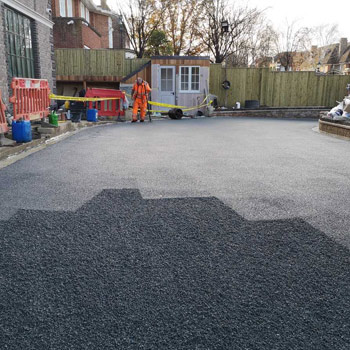
Overlay vs Replace
Laying new tarmac over an existing surface isn’t always the right solution, but in the right conditions, it could be the smartest and most efficient option.
A tarmac overlay may be suitable if:
✓ The existing surface is structurally sound without any significant cracks or deep potholes.
✓ There’s no evidence of movement or sinking in the base layer.
✓ Drainage works properly, meaning there isn’t any standing water after rain.
✓ The current surface is reasonably level, allowing for a consistent finish.
A full replacement may be needed if:
✓ The driveway is showing signs of subsidence or instability.
✓ Cracks and potholes are too big or there’s widespread surface damage.
✓ Water pools or runs toward buildings, indicating drainage issues.
✓ The existing materials are loose, crumbling or poorly bonded.
Benefits of Tarmacking Over an Existing Driveway
Having a good-looking and functional driveway is a plus for any home. And when conditions are right, applying new tarmac over an existing driveway can offer several practical advantages:
1. More cost-effective than a complete replacement
Because there’s no need to excavate or remove the existing surface, labour and material costs are lower, making it a budget-friendly option for structurally sound but worn-out driveways.
2. Faster turnaround time
With less groundwork involved, overlay projects are usually quicker to complete. That’s great news if you want fewer delays, less mess and a shorter window of inconvenience.
3. Less disruption to your property
A full driveway replacement can involve heavy machinery, noise and multiple days of site work. An overlay is far less invasive, with less impact on surrounding areas like lawns, gardens or paving.
4. Reduced material waste
By building on top of the existing base, you reduce the amount of waste that has to be removed and disposed of – tarmac overlays are a more sustainable choice when appropriate.
5. Ultra-smooth & refreshed finish
When done by professionals, a tarmac overlay restores a tired, uneven surface. It gives your driveway a clean, uniform look, improving function and curb appeal.
Why Professional Assessment Matters
While a tarmac overlay can be a smart option, it’s not something that should ever be done without experience. The condition of the existing driveway needs to be assessed thoroughly before deciding on the right approach.
That’s because not all issues are visible at the surface. In fact, a driveway that looks fine could still have problems underneath, like a weakened sub-base or poor drainage that would cause a new tarmac layer to fail. On the other hand, a surface with minor wear might be perfectly suitable for overlay, saving time and money if done correctly.
Tarmac experts will take into account:
- Surface condition: checking the driveway has been properly maintained, looking for cracks, dips or loose areas
- Base stability: ensuring the underlying layers are solid and well-compacted
- Drainage performance: confirming that water runs off effectively and doesn’t pool
- Edge strength: making sure the borders can support a new layer without breaking away
Getting expert advice helps you to avoid short-term fixes that lead to expensive long-term issues, whether that means resurfacing or starting from scratch.