Planning a new driveway often seems like a straightforward job. Before any work begins, you must check to see if you need planning permission.
In this article, we’ll guide you through the rules around planning permission for tarmac driveways so you know what to check before you get started on any work.
Do I Need Planning Permission for a Tarmac Driveway?
In most cases, you don’t need planning permission for a tarmac driveway if the surface is drained correctly and water doesn’t run onto the road.
Permission may be required if the driveway is over 5 square metres without proper drainage or if it’s a listed property, is in a conservation area or involves new access to a highway.
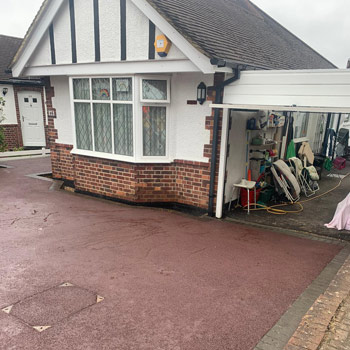
Planning permission is not usually required if:
1. The surface drains correctly
Water must either soak into the ground via a permeable surface or be directed into a suitable drainage system within your property, like a soakaway, gravel border or channel drain.
2. The driveway is for a single-dwelling
You’re usually covered under permitted development rights if the property is a house (not a flat, maisonette or converted building).
3. The total area is under 5 square metres
If the area being surfaced with tarmac is small and doesn’t cause runoff onto public roads, it’s generally exempt from planning rules.
4. No changes are being made to access or boundaries
If you’re only resurfacing an existing driveway with no alterations to pavements, entrances or boundary lines, permission is also unlikely to be needed.
When you might need it:
1. Surface water drains onto the road or pavement
If rainwater runs off your driveway into the public highway rather than draining into your own land, permission is often required. The reason for this is to prevent local flooding and pressure on public drainage systems.
2. The surface area is over 5 square metres and non-permeable
If you’re using a non-permeable tarmac with no suitable drainage provided, you may need permission and for larger areas too.
3. You live in a conservation area or your home is listed
Extra restrictions apply to listed buildings and properties in conservation areas. Even minor external changes could require consent, including driveways.
4. You’re creating or widening access to a public road
If your project involves adding a new entrance or significantly altering an existing one, especially onto a classified road, you may need approval from both the local planning authority and the highways department.
5. The property is not a single dwelling
Flats, maisonettes and some converted properties often have different planning rules. You must check with local planning because permitted development rights may not apply.
Surface Water Management Matters
In 2008, the UK introduced rules to manage surface water more sustainably to reduce pressure on public drains and prevent localised flooding. That’s why new or replacement driveways must now deal with rainwater within the boundaries of your property.
How to comply with drainage rules:
Use a permeable surface – While standard tarmac isn’t permeable, some specialist products are, allowing water to soak through and filter into the ground.
Install a drainage system – If the surface itself isn’t permeable, you can still comply by including features like:
A. A soakaway. This is a gravel-filled pit where water drains naturally
B. A channel drain that redirects water into a garden or lawn
C. A French drain or underground pipe system that handles runoff discreetly
Where to Check and Who to Ask
If you’re unsure whether planning permission is needed for your driveway, the best step is to check with your local planning authority before any work begins:
Your Local Authority Website
Most councils have a planning section where you can find driveway guidance, local policies and contact details.
The Planning Portal (England and Wales)
Visit planningportal.co.uk for general rules, interactive guides and a valuable tool to check if your project falls under permitted development.
Speak to a Planning Officer
If you’re in doubt, a quick call or email can clarify things. They’ll let you know if an application is needed and what documents you may need to provide.